Fly Ash Delivery
in Houston, TX
Fly ash is a specification-driven industrial material, not a generic commodity.
Dump Trucks of Houston coordinates participating sources, trucking, requested designation, documentation, timing, and site logistics. We do not manufacture fly ash, guarantee that a source carries every type, or determine suitability for a construction application.
What Is Fly Ash?
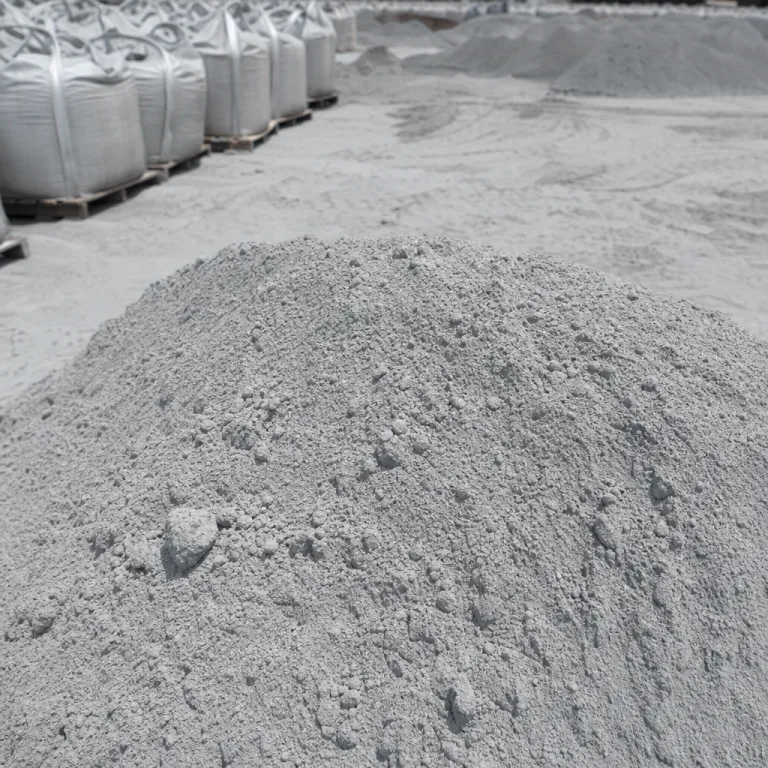
Fly ash is a fine particulate material collected from coal combustion exhaust streams at certain power-generation facilities. While it is broadly categorized under one name, material characteristics vary extensively.
Its characteristics can vary with fuel, combustion, collection, source facility, processing, storage, classification, and chemistry.
Not a Universal Commodity
Fly ash is not a universal product. Materials should not be treated as interchangeable; the available supply and documentation must be reviewed against the requirements governing the specific project.
Class F vs Class C Fly Ash
Class F and Class C terminology identifies materials with different chemical characteristics and potential applications.
The project specification controls which classification is appropriate. Source documentation should confirm the classification of the supplied material before delivery. Substitution of one class for another should not be assumed without the project team’s approval.
Class F Fly Ash
Class F may be evaluated for pozzolanic properties, subject to project requirements. Its applicability is an engineering determination.
Class C Fly Ash
Class C may exhibit pozzolanic and some cementitious characteristics. Structural or stabilization use requires project review.
Engineering Reliance
We do not provide design advice or publish chemical thresholds. Neither class is presented as universally stronger, better, safer, or more environmentally friendly. Exact ASTM requirements must come from current authoritative or project documentation.
Common Uses for Fly Ash in Construction
Where specified or accepted by the project team, fly ash may be considered for:
Crucial Qualification: We do not imply fly ash can simply be dumped into soil to stabilize it. Actual mix design, necessary dosage, suitability for the specific site conditions, environmental acceptance, and correct installation are entirely engineering and project management matters.
Fly Ash for Concrete Applications
Certain fly ash materials may be evaluated for use as supplementary cementitious materials when concrete mix designs and applicable specifications explicitly call for them.
Project teams may review source, classification, chemistry, consistency, documentation, mix design, and acceptance.
Logistics Coordination Only
We coordinate sourcing and logistics. We do not design mixtures, provide replacement percentages or ratios, or replace batch-plant and engineering review.
Fly Ash for Soil Stabilization
Fly ash may be evaluated for soil-treatment and stabilization systems when the project design allows it, testing supports its use, the requested material is selected, dosage and mixing are engineered, and applicable environmental requirements are addressed.
Evaluation may occur for roadway subgrades, industrial pads, civil earthwork, and selected site-development applications.
Factual Caution on Stabilization
- • We do not instruct users on how much fly ash to mix into their soil.
- • We do not provide or calculate dosage percentages.
- • We do not claim that all soils will respond appropriately to treatment.
- • We do not guarantee stabilization performance or structural outcomes.
Fly Ash Specifications & Project Requirements
Customers should identify the controlling requirements for their project.
Discussed requirements often revolve around:
We do not invent, prescribe, or assume limits. Customers should provide the applicable specification before dispatch so the participating source can confirm the available material and supporting documentation.
Source Documentation & Testing
Projects may request source certificates, product data, testing reports, delivery tickets, and project-specific records.
Document availability depends on the participating source. We coordinate logistics and do not independently certify material.
Fly Ash Source Availability
Fly ash availability can be less predictable than common aggregates because the requested classification and supply depend on source-facility, processing, storage, and inventory conditions.
Availability may depend on generating or source facilities, processing and storage operations, current inventory, the requested classification, regional logistics, and concurrent project demand.
High-volume projects should confirm source capacity early. We do not make unverified claims about current regional shortages.
Bulk Fly Ash Delivery for Houston Projects
We coordinate bulk delivery tailored to large civil projects, industrial sites, stabilized-soil operations, and concrete-related applications where appropriate across the Houston region.
Coordination inputs should include:
- Exact project location
- Specific material designation
- Estimated quantity
- Source and documentation requirements
- Delivery timing and sequence
- Required receiving method
- Site access limitations
- Storage or placement plan
High-Volume Fly Ash Logistics
High-volume planning connects source capacity, loading, transportation cycle time, and site receiving.
Review quantity, route, production target, receiving pace, weather, handling, and staging before scheduling.
We do not promise daily tonnage or unverified fleet capability. Throughput depends on the source, route, transportation, and receiving contractor.
Fly Ash Handling Considerations
Fly ash is a fine particulate material, so handling differs from rock or gravel.
Wind and moisture may affect handling. Receiving equipment must match the supplied material and transportation method, while storage follows project and source requirements.
Project and site-specific dust-control procedures may apply. We do not provide dust-exposure or personal protective equipment instructions; consult the applicable Safety Data Sheet, site requirements, and qualified safety personnel. The material should not be assumed harmless.
Safety Data & Site Requirements
Review the supplying source’s Safety Data Sheet where applicable before material arrives.
Follow site safety procedures and applicable project and environmental requirements, and confirm unloading and handling plans before dispatch.
Our logistics coordination does not replace safety professionals, environmental consultants, engineers, or project specifications.
Weather, Moisture & Delivery Conditions
Rain, wind, ambient moisture, wet access, and changing site conditions may affect hauling, unloading, material handling, and the project schedule.
Weather and site procedures may require schedule or handling changes. We do not make chemistry claims about moisture exposure; contractors should consult the specification, supplying source information, and site safety team for applicable limitations.
Choosing Transportation for Fly Ash
Equipment cannot be selected until the supplied form and receiving capability are known. Requirements may differ for dry, conditioned, moistened, blended, or another project-specific form.
Equipment Selection Verification
Confirm supplied form, source loading method, receiving equipment, site requirements, and dispatch availability before selecting transportation.
- We do not imply or guarantee pneumatic bulk tanker capability.
- We do not claim that dry, conditioned, moistened, blended, or super-sack delivery formats are universally supported.
- We do not make generalized truck recommendations for fly ash delivery until operational parameters are formally verified with the participating source and the receiving site.
Jobsite Access & Receiving
Define the receiving area, verify stable access for loaded vehicles, and establish staging before delivery.
Coordinate unloading sequence, active equipment, source timing, site traffic, and weather with the receiving operation.
Material receiving must be coordinated directly with the contractor's internal operation.
Environmental & Project Requirements
The procurement, use, storage, handling, and placement of fly ash may be subject to project specifications, environmental requirements, source documentation, destination and site rules, and applicable regulations.
Regulatory Caution
Dump Trucks of Houston does not claim that fly ash is automatically:
- Environmentally friendly
- Non-hazardous
- Inert
- Safe for unrestricted fill
- Approved for any particular site
We do not make regulatory determinations, nor do we use "green" or sustainability claims unless they can be formally supported by project documentation.
Fly Ash Delivery Cost Factors
Pricing is project-specific rather than a universal published range.
How Fly Ash Delivery Coordination Works
Before dispatch, complete these project-specific coordination steps:
Fly Ash Delivery Questions
Review common questions regarding sourcing, classification, and logistics for Houston jobsites.
What is fly ash?
Fly ash is fine particulate material collected from coal-combustion exhaust streams at certain power-generation facilities. Fuel, combustion, collection, processing, storage, source, classification, and chemistry can affect its characteristics.
What is fly ash used for?
Project-approved uses may include supplementary cementitious material in concrete, selected soil-treatment systems, controlled low-strength material, engineered fill, and civil or industrial construction. The specification, testing, source documentation, and project acceptance control suitability.
What is the difference between Class F and Class C fly ash?
Class F and Class C are classification terms associated with different chemical characteristics and potential applications. Neither is universally better or interchangeable. The project specification and supplying source documentation should identify the required classification.
Is fly ash used in concrete?
Certain fly ash materials may be used as supplementary cementitious material when the concrete mix design and applicable project requirements call for them. Dump Trucks of Houston does not design mixtures, recommend replacement percentages, or approve a source for concrete use.
Can fly ash be used for soil stabilization?
It may be evaluated for soil treatment when project design, testing, material selection, engineered dosage and mixing, environmental requirements, and site acceptance support its use. Fly ash should not simply be added to soil without that review.
Do I need a project specification before ordering fly ash?
A specification or documented project requirement is strongly recommended because classification, source, chemistry, fineness, testing, documentation, material form, and acceptance may matter. Provide the controlling requirements before scheduling.
Can you provide source documentation?
We can communicate requested documentation needs during coordination, but availability depends on the participating source. Product data, test reports, source certificates, delivery tickets, or other records should be confirmed with the supplying source before scheduling.
Can fly ash be delivered in bulk?
We can review bulk coordination requests, but source availability, supplied form, loading method, transportation capability, receiving equipment, documentation, site access, and schedule must all be confirmed before dispatch.
What type of truck transports fly ash?
No universal truck recommendation is appropriate. Equipment depends on whether and how the source supplies the material and how the site receives it. Pneumatic tanker, super-sack, dry, conditioned, moistened, blended, and dump-truck capabilities are not assumed; dispatch must verify the actual method.
How much fly ash does my project need?
Quantity should come from the project takeoff, approved concrete mix design, engineer, or soil-treatment plan. The generic cubic-yard truck calculator may not apply, and Dump Trucks of Houston does not calculate treatment dosage or mixture proportions.
How much does fly ash delivery cost in Houston?
Cost depends on classification, source, availability, documentation, quantity, haul distance, verified transportation and handling method, site access, receiving time, schedule, and high-volume logistics. Pricing requires a project-specific review.
Related Industrial & Earthwork Materials
These materials are not substitutes for fly ash. Review them only where project documents call for separate earthwork or base materials.
Stabilized Sand
Pre-blended cementitious sand used in specification-driven utility and civil work.
Select Fill
Soil chosen against defined project requirements for compaction and pad building.
Common Fill
Bulk volume material used for general elevation changes and non-structural grading.
Road Base
Crushed aggregate blends used for driveways, parking, and designed base layers.
Coordinate Your Industrial Material Logistics
Provide the location, material designation, documentation needs, quantity, supplied form, receiving method, and storage plan for source and transportation review.