
Rip Rap Delivery
in Houston
Contractor-grade dispatch for heavy civil, drainage, and erosion-control projects. We coordinate the sourcing and bulk delivery of large angular stone from participating quarries to your jobsite.
What Is Rip Rap?
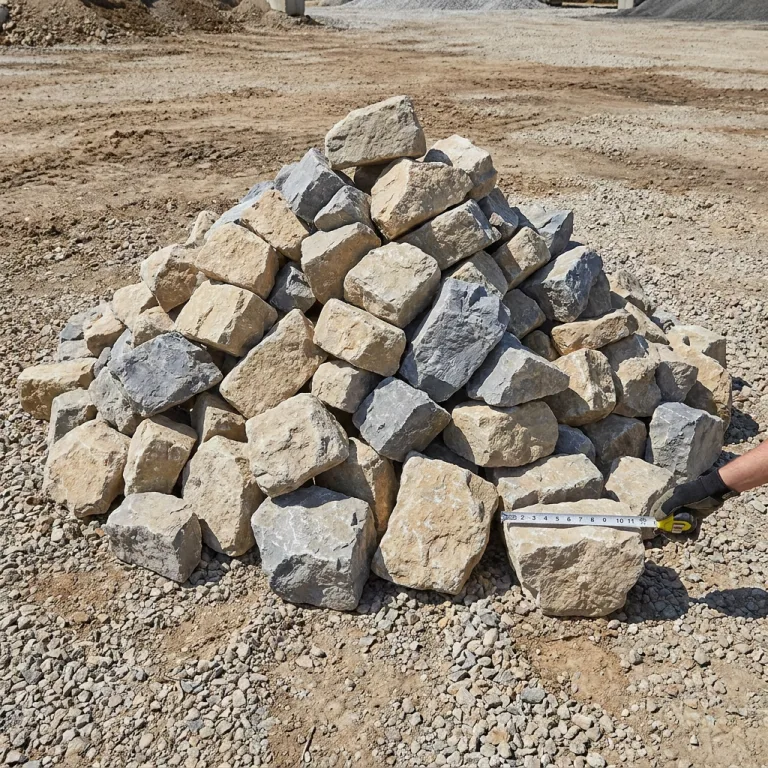
Rip rap consists of large, highly durable stone utilized in heavy civil construction where substantial rock mass is required to withstand hydraulic forces.
Unlike small decorative gravels or graded base materials, rip rap is typically characterized by its angular or irregular shape. This jagged structure allows the massive stones to interlock, forming a stable, heavy armor against moving water. It is a critical component in engineered erosion-control and water-management applications where specified.
However, rip rap is not a single, universally standardized product. The term describes the function and general size category of the stone, but specific material properties vary immensely by source. Do not define rip rap by one universal size, and do not imply every rock sold as rip rap meets the same specification.
Source Variation
When sourcing rip rap for Houston-area projects, contractors must account for significant variations in stone type, nominal size, overall gradation, angularity, cleanliness, and durability.
Availability
Availability fluctuates among local quarries and recycling facilities. Securing the correct material requires clear communication of the project's specific engineering requirements, ensuring the dispatched stone meets the intended function.
Common Uses for Rip Rap in Houston
Houston drainage and flood-control work can require large stone where civil or hydraulic plans specify it. Rip rap may be considered for demanding water-management applications, but the design and stone requirement control its use.
Drainage Channels & Outfalls
Specified stone placement at pipe exits, culvert areas, and drainage channels where the hydraulic design calls for it.
Slope Stabilization
Designed slope or embankment protection where the plans address stone size, underlying soils, filter layers, and placement.
Shoreline & Bank Protection
Specified work at detention basins, lakes, industrial sites, or banks where a qualified design accounts for water and soil conditions.
Erosion-Control Structures
Stone supply for designed ditch protection, check structures, and spillway-related work when the project documents call for rip rap.
Simply dumping rip rap does not guarantee erosion protection.
Actual erosion-control design is a complex engineering discipline. The successful performance of rip rap depends entirely on the calculated water velocity, slope gradient, specific stone size, the presence of an appropriate filter layer or geotextile fabric, the project specifications, and the nature of the underlying soils.
We coordinate the sourcing and delivery of the stone. We do not design hydraulic structures, prescribe installation methods, or guarantee erosion-control performance. Always refer to your project specifications and qualified civil engineers.
Rip Rap Size & Project Requirements
Because it serves structural engineering roles, rip rap is not sold in a single "one size fits all" dimension. Do not invent standard dimensions or universal classes. If a customer has civil plans, drainage plans, TxDOT/Harris County/municipal specifications, or engineer requirements, they should provide them before sourcing.
Specification Methods
Rip rap may be requested by:
- Size Range: Defining an acceptable span.
- Nominal Size: Specifying an average target stone size.
- Weight Class: Defining rocks by mass.
- Project Designation: Conforming to a specific job requirement.
Agency Designations
Materials may be requested by specific agency designations or project specifications. Any named specification must be explicitly confirmed through the supplying source and verified with applicable documentation.
Material Comparisons
Rip rap belongs in the broader rock and aggregate category, but it serves a very different structural job than decorative gravels or compactable bases.
Rip Rap vs Bull Rock
Bull Rock typically consists of rounded or smoother stone highly valued for decorative landscaping and drainage uses. It exhibits different sizing and field behavior compared to larger rock.
Rip Rap is generally much larger, jagged, and heavily angular. It is oriented strictly toward civil and erosion-control applications and is often specification-driven. One is not universally better; they simply serve different engineering functions.
Rip Rap vs Road Base
Road Base is a graded aggregate containing an engineered blend of crushed stone and fines (dust) designed for base-course applications as a compactable layer.
Rip Rap is comprised entirely of large stone oriented toward drainage, erosion, and slope applications. They serve entirely different functions and do not interchange.
Rip Rap Delivery & Import
Moving hundreds or thousands of tons of massive stone into civil projects, drainage projects, commercial developments, utility sitework, and detention/erosion work requires precise, heavy-duty logistics.
Large rock creates radically different loading and unloading considerations than sand or dirt. The immensity of the stone dictates the pace of the entire operation. Project inputs must be locked in before the first truck loads: requested size, volume or tons if supplied, source, delivery location, access, placement area, truck type, and unloading method.
Source Loading
Loading massive boulders at the quarry requires specialized equipment. The size of the material impacts loader speed and truck cycle times.
Payload Limits
The extreme density and weight of the stone mean trucks hit their legal payload limit very quickly. Do not assume every truck configuration is appropriate.
Haul Distance
Distance between the capable quarry and the jobsite significantly drives the production schedule and overall dispatch rotation.
Staging
Active jobsites must plan dump-zone access carefully. Deliveries must align with loader/excavator coordination on-site.
Choosing Trucks for Rip Rap Delivery
Equipment choice is based on stone size, weight, access, route, legal payload, and the unloading method.
Single-Unit / Tandems
Single-unit and tandem / tri-axle trucks are highly appropriate for smaller or tighter work zones where access is constrained.
End Dumps
End dumps provide high-volume delivery for open conditions where it is safe to raise the trailer. They demand extremely stable, flat ground for safe unloading.
Belly Dumps
We only mention belly dumps if operationally appropriate for the material size and application. They are rarely dispatched for massive rip rap because large boulders cannot safely clear bottom gates.
Placement & Site Access
Dump Zone Stability
Trucks deliver the material to a designated drop point; they do not construct the erosion-control feature. The site must provide stable dump zones that can support the ground pressure of loaded trucks.
Dumping massive stone near active slopes, drainage channels, or water proximity requires extreme caution regarding overhead clearance, trailer stability, and the ability to safely unload large stone on soft ground. We do not give installation design instructions.
Excavator Access
Contractors must coordinate heavy equipment access to safely move the large stone from the truck's dump zone to its final placement area. The ability to safely navigate excavators and loaders between the staging zone and the ditch is the contractor's responsibility.
Logistics Note
Ensure your site is prepped, clear of obstructions, and capable of safely accepting large stone deliveries before dispatch begins.
Volume Planning & Export
How Much Rip Rap?
Rip rap quantities often depend on the area, planned thickness, stone size, void space, irregular slopes, and the project's design section.
Do not provide or rely on a universal tons-per-yard conversion. If our load calculator is used for purely cubic-yard/truck planning, it must be understood as a preliminary logistics estimate, not an engineering takeoff.
Open Load CalculatorExport & Removal
While our primary operation is import, we can lightly discuss excess stockpile removal and the hauling of removed stone from reconstruction work.
Destination acceptance applies. Do not imply used rip rap is automatically reusable; mixed or contaminated stone is evaluated differently by accepting facilities.
Cost Factors
We do not publish fake price lists. The delivered cost of rip rap is calculated based on exact, real-time parameters unique to your civil project.
Rip Rap Questions & Answers
What is rip rap?
Rip rap is a broad name for larger angular or irregular stone considered for civil, drainage, slope, shoreline, and erosion-control work where the project design calls for it. Stone type, nominal size, gradation, durability, cleanliness, and availability vary by source.
What is rip rap used for?
Potential uses include drainage channels, outfalls, culvert areas, slopes, banks, detention projects, and other erosion-control structures. Suitability and placement depend on the hydraulic design, soils, filter layer, stone requirement, and project specifications.
What sizes does rip rap come in?
There is no universal rip rap size. Projects may request a nominal size, size range, weight class, agency designation, or another documented requirement. Provide the plans or specification so a participating source can confirm availability and documentation.
Is rip rap the same as bull rock?
No. Rip rap is typically larger and more angular or irregular, with civil and erosion-control uses that may be specification-driven. Bull rock is generally rounded stone selected for different landscape and drainage applications.
Can rip rap be used for erosion control?
It may be specified as part of an erosion-control design, but simply dumping large stone does not guarantee protection. Water velocity, slope, stone sizing, filter or geotextile layers, underlying soil, placement, and engineering requirements control performance.
Can you coordinate rip rap for drainage projects?
We can coordinate bulk delivery for drainage, utility, commercial, and civil projects when the requested stone, source availability, legal payload, access, unloading method, dump zone, and project schedule are confirmed.
What truck delivers rip rap?
Truck selection depends on stone size, weight, route, legal payload, site access, dump-zone stability, overhead clearance, and unloading method. Single-unit, tandem, tri-axle, or end-dump equipment may fit different jobs; not every configuration fits every stone.
How much rip rap do I need?
Quantity depends on the designed area, planned section, stone size, void space, irregular slopes, and project takeoff. The calculator can support preliminary truck planning, but it is not a hydraulic or engineering quantity calculation.
Can excess rip rap be hauled away?
We can review removal of excess or recovered stone when it can be characterized, loaded safely, and routed to an accepting destination. Previously placed or contaminated stone is not automatically reusable or accepted.
How much does rip rap delivery cost in Houston?
Cost depends on source, requested size or specification, documentation, volume, haul distance, truck configuration, loading, access, unloading conditions, wait time, schedule, and current availability.
Coordinate Your Civil Rock Logistics
Provide your project location, volume requirements, intended use, and any required agency specifications. We will review the logistics and coordinate the right trucks for the heavy haul.